Uma aura de mistério cerca a biografia de Sun Ra: até o momento em que ele partiu para outro planeta (em 1993), ninguém sabia dizer ao certo o seu nome de batismo, data e local de nascimento. Mais tarde, biógrafos garantiram que foi em 22 de maio de 1914 no Alabama, estado vizinho daqueles onde se convém dizer que nasceu o blues estadunidense, New Orleans e Mississipi. A mistura entre aspectos do som de New Orleans do começo do século XX com teclados eletrônicos da 2ª metade do século torna o som de Sun Ra inclassificável: ao contrário de uma penca de músicos negros que aderiram ao jazz fusion por volta de 1969 ou 70 (Miles Davis, Freddie Hubbard, Herbie Hancock, Wayne Shorter, etc), Sun Ra já usava teclados eletrônicos muito antes e não abandonou o piano. Nesses dois álbuns, gravados quando a moda do fusion já estava menos predominante, Sun Ra fica indo e vindo entre os sons, digamos, tradicionais do seu piano e os teclados que ele toca sem nenhum paralelo com o estilo, por exemplo, do Hancock aqui citado, que escolhia timbres e acordes menos ousados, menos de vanguarda.
Aqui uma interrupção: Sun Ra, obviamente um músico de vanguarda e pouco preocupado em lançar hit singles nas rádios, achava que os músicos de vanguarda se levavam, em geral, muito a sério. Por isso, nos anos 1950 começou a usar roupas coloridas inspiradas em temas de ficção científica ou do Egito dos faraós, o que dava uma identidade visual única e um pouco cômica para seus grupos. Outro parêntese: Pharoah Sanders recebeu o seu nome artístico por uma sugestão de Sun Ra.
Mas talvez o mais surpreendente nesses shows seja outra coisa: lembrar que Sun Ra já tinha passado dos 60 anos e, no de 1983, já tinha 69. São poucos, pouquíssimos os artistas que, com essa idade, se reinventam de um mês pro outro, trocam de instrumentos, de repertório, improvisam a cada noite nos vários sentidos do verbo improvisar. E nesses dois shows ele se apresenta sem a Sun Ra Arkestra, grupo que servia como um certo porto seguro misturando trechos improvisados com trechos já ensaiados pelo grupo de mais de dez músicos que incluia desde 1968 a cantora June Tyson. Aqui, sem June Tyson e sem uma parte dos seus fiéis escudeiros (o sax alto de Marshall Allen, por exemplo, está no show de 1983 mas não no de 1978), Sun Ra parece ainda mais livre do que em outros registros ao vivo.
No disco de 1978 temos um quarteto: além de Sun Ra, Michael Ray (trompete), John Gilmore (sax) e Luqman Ali (bateria). No de 1983, a banda de estrelas com a qual Sun Ra fez uma breve turnê europeia, incluindo Don Cherry (trompete), Archie Shepp (sax) e Richard Davis (baixo).
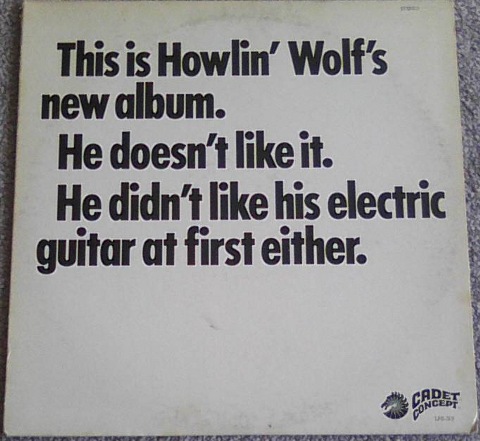 Última observação: outro dia assisti ao filme oscarizado The Sinners, que aliás achei bem mediano e previsível por motivos que não vêm ao caso aqui. Apesar do roteiro pasteurizado, o filme traz certos aspectos do blues que não deixam de ser interessantes. É curioso pensar que o filme se passa em 1932, ano em que Sun Ra certamente já tocava piano em algum lugar, provavelmente no sul dos EUA e muito antes de ficar famoso. Podemos lembrar ainda que o músico jovem do filme, com cerca de 20 anos, nasceu na mesma década de Sun Ra, assim como vários outros músicos de blues até hoje lembrados. Howlin’ Wolf, por exemplo, nasceu no Mississipi em 1910 e depois se mudaria para Chicago, onde gravou uma série de singles. Bem depois, em 1969, sairia seu primeiro LP com essa capa aqui ao lado, dizendo que ele não gostou do disco e nem da sua guitarra elétrica da primeira vez que a usou. A cena final do filme faz alusão à passagem do violão para a guitarra elétrica. Sun Ra – que aliás também viveu em Chicago nos anos 1950 e gravou naquela cidade seus primeiros LPs – viveu esse mesmo período, e foi um dos pioneiros na transição do acústico para o elétrico, só que para o caso dos teclados. Não tendo abandonado o piano elétrico, assim como não abandonou certos ritmos típicos do jazz pré-2ª-guerra, Sun Ra foi acrescentando novas cartas ao seu baralho e, ainda na década de 1980, em turnê pela Europa, acrescentava mais e mais, sem medo de ser feliz.
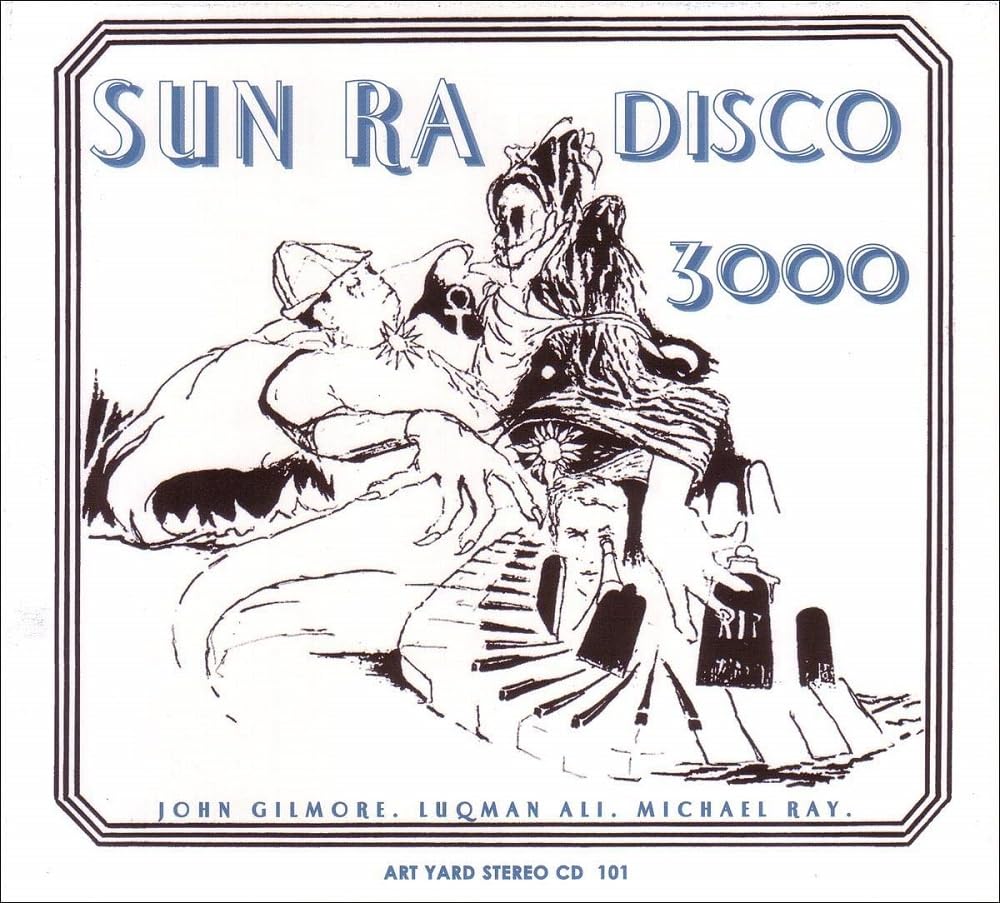
Sun Ra Quartet: Disco 3000
CD1
Disco 3000
Sun of the Cosmos
Echos of the World
Geminiology
Sky Blues
Friendly Galaxy
CD2
Third Planet including Friendly Galaxy
Dance of the Cosmo Aliens
Spontaneous Simplicity
Images including Over the Rainbow
When There Is No Sun
We Travel the Spaceways
Line-up & Recording Date:
Sun Ra – organ, piano, drum box, etc; Michael Ray – trumpet; John Gilmore – tenor sax; Luqman Ali – drums
Live in Italy, January 1978
BAIXE AQUI – DOWNLOAD HERE
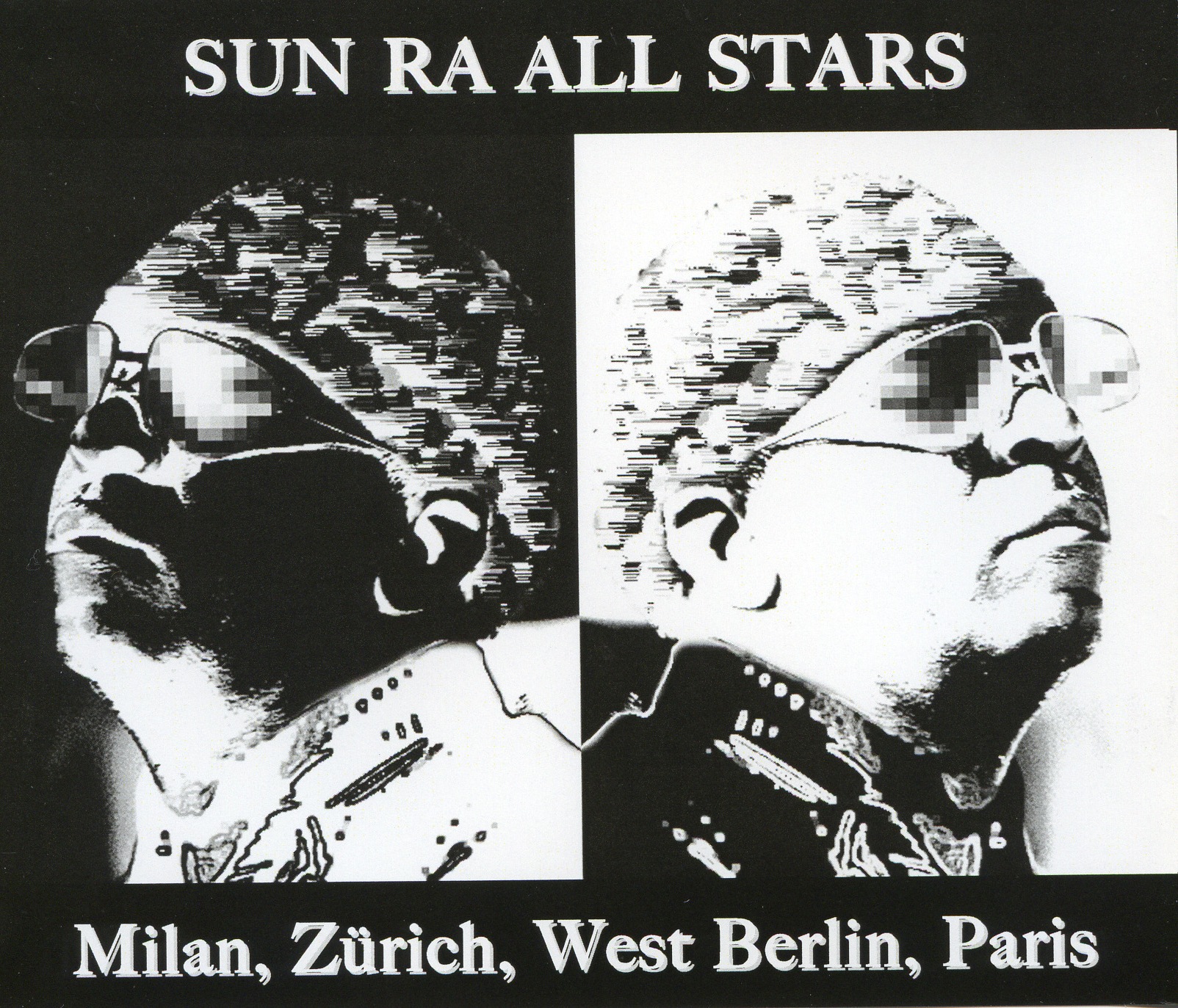
Sun Ra All-Stars: Live in Zürich, 1983
1. Unidentified Title
2. Unidentified Ra Piano Solo 3. Unidentified Blues
4. Lights on a Satellite
5. What’s New
6. Cocktails for Two
7. Poinciana
Zürich Jazz Festival, 28/10/1983
Pleyel
Baita! Baixando…
Schoenberg: Pierrot Lunaire, Op. 21
de Aaron Wyanski and Anna Elder
https://aaronwyanski.bandcamp.com/album/schoenberg-pierrot-lunaire-op-21
Sometimes a work, a project, a concept comes from so far out of left field that you have to catch yourself and say “what?!” It’s something that is so beyond the norm, so “out there,” indeed wacko, that you can’t at first decide if it’s brilliant, or foolhardy. Or perhaps just delusional. Anyway, that’s quite a wind-up for the ongoing series Schoenberg in Hi-Fi, the brainchild of the composer Aaron Wyanski. And now we have (for the moment, at least) the culminating work of the series, his arrangement of Pierrot Lunaire.
Wyanski is a composer currently in what I would call his early mid-career, but he came to his practice a bit late. He’s a marvelous jazz pianist, and he has a deep and scholarly knowledge of the tradition. But from the very beginning, he also had a genuine love of the Second Viennese School. He was never put off by atonality and serialism. Indeed, I think he feels that those composers’ breakthroughs of style and technique were in fact an index of their freshness. (And realize we are talking about music from the first half of the 20th century, not so much the post-WWII generation that rationalized their discoveries into a much more constraining aesthetic and technical straitjacket.)
So quite naturally, the mixing of jazz and modernist composition is a natural intersection for him. This is not something unprecedented. Back in the mid-20th century, there was the school of “Third Stream,” where Gunther Schuller proselytized for a synthesis of jazz and classical practice. I think one of Milton Babbitt’s best pieces is All Set for jazz combo (as always he was a master of the bad pun). But Wyanski has taken this challenge and run with it in a different direction. He’s decided to create an alternative history working from a few salient facts. Above, I called this piece an arrangement; in fact, it’s more of a re-composition. And Wyanski has the last and best word; he calls it speculative musicology.
There are three historical groundings for the project. The first is that, fleeing the Nazis in the 1930s, Schoenberg came to America and ended up in California. He was hoping to break into the film industry composing soundtracks, but there was also a vital German emigré community in Los Angeles (Thomas Mann, Berthold Brecht, and Fritz Lang among others). Not surprisingly, the film composition career did not develop, but Schoenberg found a home in academia, starting at USC, and then moving after a year to UCLA, where he taught a renowned class in analysis and composition, and had a number of extremely talented and important students. The most unlikely but ultimately most famous one is John Cage.
The second factor is that in this period there was emerging a new musical form that fit the mood of the era (I admit I’m stretching this a bit, as it emerges in the 1950s, just around the time that Schoenberg died). Cool jazz began to supplant the hothouse frenzy of bebop, and in particular there emerged a knowing quasi-kitsch called “space age bachelor pad music.” It was pioneered by the transplanted Mexican composer/arranger Juan Esquivel, and its sound is exactly like its moniker: sci-fi, unrepentantly cheap, and sexy. But with great production values, and there’s an underlying current of Latin jazz.
The third and final influence is the emergence of a radically new technology for recorded music. This is High Fidelity, which morphed soon into stereo. Sounds were reproduced with far more accuracy and vividness, and found a new medium of distribution in the LP record, which gave almost an hour of music over its two sides. And the studio environment in which music was recorded (especially in the filmcentric world of L.A.) gave the potential for a product that was “larger than life.”
We already know that Schoenberg loved to play tennis in the balmy California climate. Wyanski goes one step further and imagines that he found a way to create and rearrange his music in the idiomatic style of his new home. The result is, as they say, out of this world.
Likewise, this is a studio realization. Wyanski painstakingly plays every note into a combination of Logic and ProTools. As a result, it has an utterly realistic, natural, and swinging character. The virtual ensembles range from small combos to big band. Every single note is from Schoenberg, and nothing is added, except—importantly—the rhythm track (as well as any doublings that enhance the orchestration). It’s amazing how having the drum set and other percussion instruments suddenly makes the music so “accessible.” The whole thing opens up. This goes a long way towards refuting the common saw that “atonal” music is inherently off-putting.
There are so many surprising and exhilarating transformations here that I’m going to leave most of the discovery to the listener. If you already know Pierrot, you may be both confused and thrilled. If you don’t, it will make you want to check out the source. I’ll mention only two. Der kranke Mond (the Sick Moon) makes its duet between voice and flute into a slinky dance between the singer and pizzicato bass. And Enthauptung (Beheading), after a crazed modernist big band rush, settles into a laid-back jazz combo for the epilogue-instrumental, processed so as to sound like an archival 50s recording. It also goes without saying—but must be said!—that vocalist Anna Elder pulls off the tightrope act of scatting her way through this new terrain while somehow maintaining a deep and audible connection to Schoenbergian roots.
Pierrot is Schoenberg’s most famous piece, and it remains a watershed in Western classical music. When this version starts on an extended bongo roll, you can of course feel there is something transgressive, even disrespectful in the gesture. But think again. In 1901-02, the composer was the director of a cabaret theater in Berlin, doing all the heavy lifting of conducting, rehearsing, and arranging. The whole thing didn’t turn out well, but it puts him much closer to someone like Kurt Weill than one might usually think. Wyanski gives us an alternative Schoenberg who really isn’t too far from the original, and who also somehow may be even better suited to our times and tastes.
– Robert Carl
créditos
lançado em 29 de maio de 2026
Anna Elder – soprano
Arranged by Aaron Wyanski