 – Postagem original de 2009 –
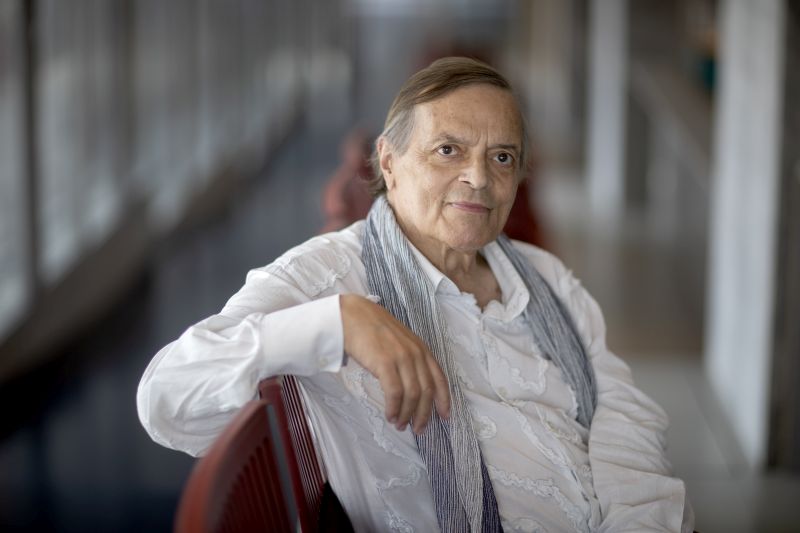
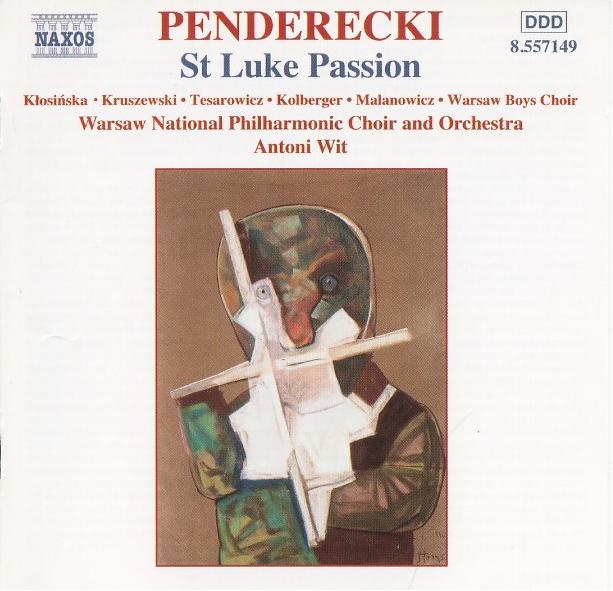
Descobri esta obra na discoteca do Instituto Goethe lá pelos anos 80, quando este ainda localizava-se no centro de Porto Alegre e sua blibioteca-discoteca tinha a mão de Herbert Caro. A obra insere-se na fase radical de Penderecki, nada tendo a ver com sua atual fase melódica, da qual também gosto. Costuma-se afirmar que esta versão de Antoni Wit é superior àquela que ouvia lá no Goethe, que era do próprio compositor. Estou de acordo.
Um leitor da Amazon escreveu a seguinte resenha a respeito:
By Shota Hanai (Torrance, CA):
Krzystof Penderecki has become one of my favorite composers ever since I listened to some of his most radical works, including the “Threnody to the Victims of Hiroshima”, the two “De Natura de Sonoris”, and the “St. Luke Passion”, his musical depiction of the last hours of Christ.
This is one of the most graphic, most intense pieces of music the world has to witness. The work is divided in two parts. In Part I, The ominous introduction, with the chorus singing “Hail the Cross”, already invites doom. Christ’s prayer on Mt. Olives begins somberly, but leads to a teffifying climax as the chorus sings “I am crying”, before dying down to near silence. In the capture scene, once can vision the approaching Roman legion, with a series of nasty brass sounds and stampede of percussion. The mocking of Jesus is equally violent, as the entire orchestra and chorus seems to laugh at Him. Sinister monophonic notes rip the air as the chorus shouts “Crucify Him!”
Part II begins with Christ’s carrying of the cross. The cruficixion scene features one of the most excrutiating tone clusters the chorus ever produced, as overwhelming as the pain Jesus witnessed with pins hammered to His hands and feet. In the “Stabat Mater”, when the Virgin Mary watches her dying Son, the music becomes relatively calm, but the avant-garde sound is still prevalent. The music becomes violent again when Christ utter his last words, before the music dies away, along with Christ’s spirit. The concluding call for redemption begins dark, but ends in a glorious major chord, unachieved within the previous 75 minutes.
Penderecki’s rendition of Christ’s last hours is as shocking, disturbing, and powerful as the controversial Mel Gibson movie. A music like this should have a “Parental Advisory” label (and I am being a little sarcastic).
PENDERECKI: St. Luke Passion
1. Part I: O Crux ave (Hymn ‘Vexilla Regis prodeunt’) 00:05:06
2. Part I: Et egressus (St. Luke) 00:01:49
3. Part I: Deus meus (Psalm 21) 00:03:52
4. Part I: Domine, quis habitabit (Psalms 14, 4 & 15) 00:04:28
5. Part I: Adhuc eo loquente (St. Luke) 00:02:08
6. Part I: Ierusalem (Lamentation of Jeremiah) 00:01:25
7. Part I: Ut quid, Domine (Psalm 9) 00:01:17
8. Part I: Comprehendentes autem eum (St. Luke) 00:01:57
9. Part I: Iudica me, Deus (Psalm 42) 00:01:10
10. Part I: Et viri, qui tenebant illum (St. Luke) 00:02:11
11. Part I: Ierusalem (Lamentation of Jeremiah) 00:01:22
12. Part I: Miserere mei, Deus (Psalm 55) 00:04:04
13. Part I: Et surgens omnis (St. Luke) 00:04:19
14. Part II: Et in pulverem (Psalm 21) 00:00:45
15. Part II: Et baiulans sibi crucem (St. Luke) 00:00:13
16. Part II: Popule meus (Improperia) 00:07:46
17. Part II: Ibi crucifixerunt eum (St. Luke) 00:01:47
18. Part II: Crux fidelis (Antiphons from ‘Pange lingua’) 00:05:00
19. Part II: Dividentes vero (St. Luke) 00:01:12
20. Part II: … in pulverem mortis (Psalm 21) 00:05:39
21. Part II: Et stabat populus (St. Luke) 00:01:31
22. Part II: Unus autem (St. Luke) 00:02:03
23. Part II: Stabant autem iuxta crucem (St. John) 00:01:01
24. Part II: Stabat Mater (Sequence) 00:07:38
25. Part II: Erat autem fere hora sexta (St. Luke, St. John) 00:01:26
26. Part II: Alla breve 00:01:05
27. Part II: In pulverem mortis… / In te, Domine, speravi (Psalm 30) 00:04:08
Klosinska, Izabela, soprano
Kolberger, Krzysztof, reader
Kruszewski, Adam, baritone
Tesarowicz, Romuald, bass
Warsaw Boys Choir
Warsaw Philharmonic Choir
Warsaw National Philharmonic Orchestra
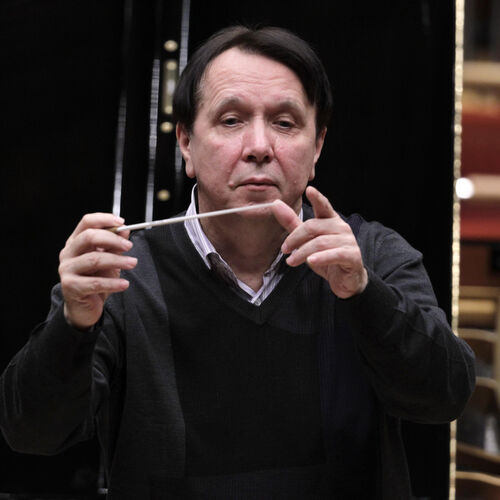
Wit, Antoni, Conductor
Total Playing Time: 01:16:22
PQP (Pleyel repostou e infelizmente adicionou a data de morte do compositor, que era vivo na época da postagem original)